Peptide powder OEM / ODM services for brands and professional channels.
A practical project starts with the intended cosmetic format and market. We then coordinate formula feasibility, target specification, sampling, packaging, quality review and production milestones.
From controlled processing to freeze-dried peptide powder formats.
This short production view illustrates cleanroom vial processing relevant to lyophilized peptide powder projects. The final route is aligned to formula, fill, packaging and buyer requirements.
Customization scope
Formula
Single peptide, multi-peptide system or supported custom brief.
Concentration
Target fill and composition reviewed for feasibility and stability.
Packaging
Bulk pouch, bottle, vial, ampoule-style kit or custom secondary pack.
Private Label
Artwork coordination and brand-ready packaging.
Semi-Finished Supply
Bulk or filled formats for downstream assembly.
Documentation
Project-specific specification and available quality files.
From project requirements to production approval.
Our customization pathway connects requirement review, targeted R&D, sample evaluation, packaging design and commercial approval. Each milestone is confirmed against the intended cosmetic format, target market, quantity and documentation needs.
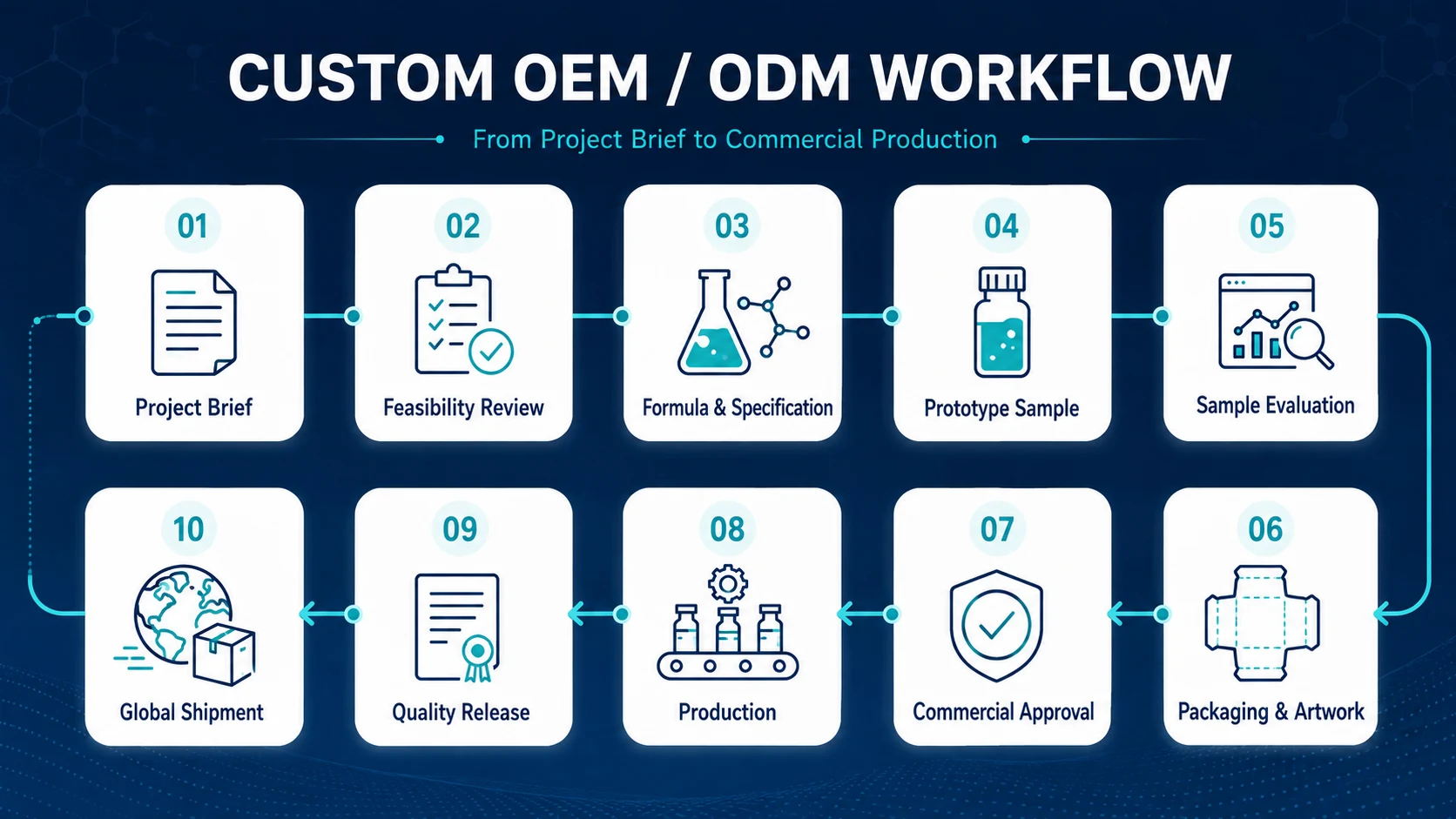
Six-stage delivery process
| Stage | Output | Buyer decision |
|---|---|---|
| 1. Brief | Project requirements and target market | Confirm intended format and forecast |
| 2. Feasibility | Ingredient, formula and pack pathway | Select development route |
| 3. Sample | Pilot sample and available documents | Evaluate fit and revise |
| 4. Commercial approval | MOQ, quote, artwork and lead time | Approve order basis |
| 5. Production | Manufacturing and packing | Approve pre-agreed checks |
| 6. Release | Batch documentation and shipment | Receive and plan reorder |
Send your OEM / ODM brief
Include target product, market, pack format, quantity and preferred launch timing.
OEM / ODM Service: what professional buyers should verify
OEM / ODM Service is most effective when commercial, technical and packaging decisions are defined through documented project gates. The applicable specification, batch documentation and finished-formula assessment remain the controlling references.
Identity and specification
Confirm the complete ingredient identity, physical format, composition basis and analytical method. Purity or assay values are only comparable when the material basis and test method are understood.
Formulation fit
Review solvent system, pH, processing temperature, addition sequence, exposure time and packaging compatibility with the qualified formulator responsible for the complete cosmetic formula.
Quality documentation
Request the product specification and the available COA, TDS and safety information for the shortlisted material. Final acceptance must use documents applicable to the ordered product and batch.
Commercial pathway
Align sample size, MOQ, pack format, artwork, lead time and forecast before scale-up. Bulk powder, filled vial, paired-solvent kit and private-label routes require different controls.
Recommended RFQ information
Include the target ingredient or function, intended cosmetic format, destination market, estimated quantity, packaging preference, required documents and launch timing. If a target purity or concentration is specified, identify whether it applies to the active peptide or the complete supplied powder.
Development and claims boundary
Raw-material information supports professional assessment but does not guarantee a finished-product result. Safety, stability, compatibility, directions and cosmetic claims should be evaluated for the complete formula and target market. This site does not position its products for injection, treatment of disease or other therapeutic use.
Can specifications be customized?
Target criteria can be discussed during feasibility review, but availability depends on the ingredient, analytical method, batch route, quantity and packaging program.
Which documents can be requested?
Available specification, COA, TDS and safety documents can be supplied for shortlisted products. The final document set is confirmed for the ordered item and batch.
Can this product be supplied under private label?
Private-label feasibility depends on formula, pack format, quantity, target market, artwork and required validation. Submit a project brief for a route-specific quotation.
Reference framework: Review target-market requirements using authoritative resources such as FDA guidance for cosmetic ingredient suppliers, the European Commission CosIng database and the ISO 22716 overview. Market suitability must be assessed for the final product.
OEM and ODM questions to resolve before sampling
An OEM or ODM project becomes predictable only after technical and commercial assumptions are converted into written decisions. Before sampling, the parties should align product identity, intended use, target market, formula or fill concept, packaging, tests, documentation, quantity and responsibilities. A headline MOQ or lead time without those inputs is not a dependable commitment. The answers below show which variables control the sample route, commercial scale, artwork and schedule. They also define the boundary between supplier deliverables and the buyer’s responsibility for finished-product claims, labeling and destination-market compliance. Use this section as a pre-RFQ checklist, then record confirmed values in the project brief, quotation, approved artwork, specification and quality agreement as appropriate. Unresolved assumptions should remain visible until an authorized project owner closes them.
- Identity and intended grade
- Format, quantity and destination
- Specification and batch evidence
- Claims and regulatory responsibility
What must be agreed before an OEM peptide sample is made?
The brief should define product identity, intended grade and market, target format, fill or concentration, excipient concept, packaging, evaluation tests, document requirements and acceptance responsibilities. Open items should be recorded before sampling.
Is there one standard MOQ for every OEM or ODM project?
No. MOQ depends on peptide, synthesis scale, purity, dosage form, fill quantity, component sourcing, artwork and testing. Sample, pilot and commercial quantities should be quoted separately after feasibility review.
What determines OEM or ODM lead time?
Lead time starts after the technical brief and commercial basis are sufficiently complete. Raw-material availability, synthesis, testing, sample revision, component procurement, artwork approval, production scheduling and release documentation can all affect the confirmed schedule.
Can packaging and private-label artwork be customized?
Vial, kit, bulk and selected private-label packaging routes can be reviewed. Component compatibility, minimum print quantities, label content, destination requirements and artwork approval must be resolved before production.
Who is responsible for destination-market compliance?
The buyer remains responsible for the finished product, claims, labeling, registration and legal route in the destination market. The supplier confirms only the agreed manufacturing scope, specification, documents and project responsibilities.